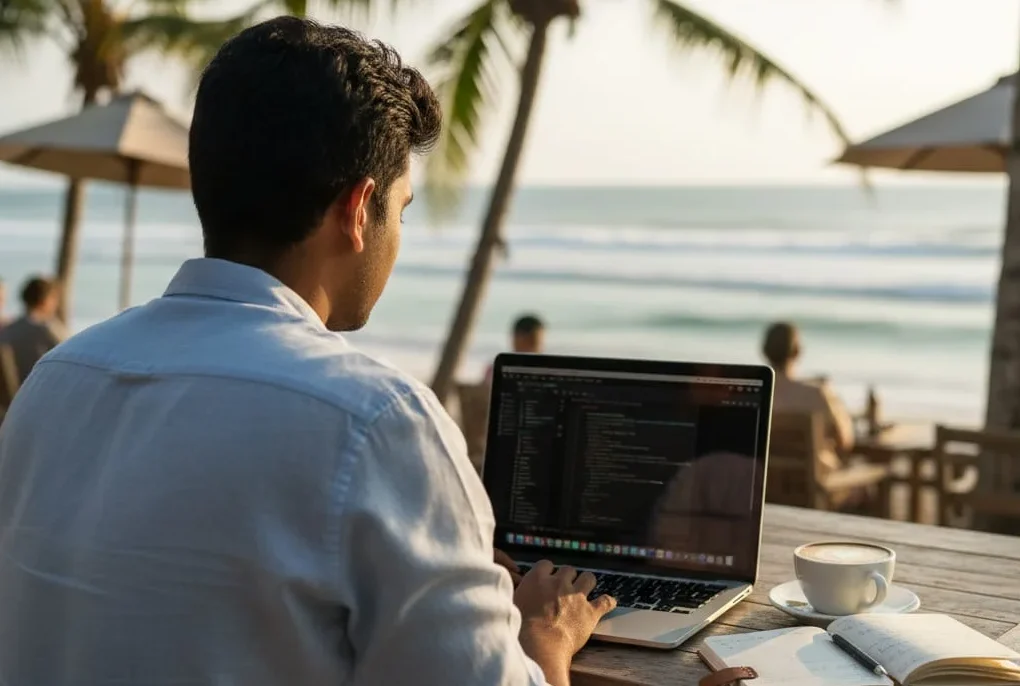
Long Term Workcation Rentals: A Strategic Guide to Remote Housing
A common misunderstanding arises when consumers view these arrangements through the simplistic lens of extended vacationing. A traditional holiday rental prioritizes leisure amenities, proximity to tourist hubs, and short-term novelty. Conversely, long-term workcation rentals demand rigorous technical specifications. Uninterrupted power supply, verified symmetrical internet speeds, ergonomic furniture, and acoustic isolation are non-negotiable prerequisites. Selecting a property based purely on scenic photography often leads to operational paralysis within the first work week.
From a real estate perspective, this category sits between short-term hospitality and traditional long-term residential leasing. Landlords often fail to comprehend the specific requirements of digital professionals. A property advertised with high-speed internet might rely on a shared, throttle-prone mesh network that collapses during video conferences. Therefore, evaluating long-term workcation rentals requires a systematic auditing process. Tenants must analyze contractual terms, tenant rights, local taxation, and infrastructural resilience before making long-term commitments.
Risks compound when remote workers oversimplify the administrative friction of working across international borders. Tax residency thresholds, visa regulations, and data compliance frameworks create complex legal exposure for both employees and employers. A stay exceeding ninety days in a foreign jurisdiction can inadvertently trigger corporate permanent establishment liabilities. Consequently, choosing long-term workcation rentals is an operational decision that intersects directly with legal, financial, and personal security.
Structural Shifts in Knowledge Work

The migration toward remote work was accelerated by economic necessity and technological maturity. As cloud-based collaboration tools evolved, the necessity for physical presence diminished. Companies recognized that distributed teams could maintain productivity while reducing corporate real estate footprints. This shift fundamentally altered human geography, enabling professionals to relocate without changing employers.
Consequently, workers sought accommodations that accommodated both professional obligations and personal exploration. The traditional paradigm of taking two weeks of annual leave was replaced by continuous, location-independent work. Extended stays allow individuals to integrate deeply into local communities rather than consuming destinations as transient tourists. This evolution created a distinct market segment within the global housing industry.
Systemic Evolution of Extended Stays
Historically, extended-stay housing catered primarily to corporate assignees, military personnel, or traveling healthcare professionals. These early options were characterized by sterile, standardized corporate apartments situated in business districts. They provided basic utilities and weekly housekeeping, but lacked regional character and modern digital infrastructure. The booking mechanisms were rigid, requiring corporate guarantees and formal leases.
The modern market for long-term workcation rentals emerged from the convergence of peer-to-peer lodging platforms and specialized coliving operator models. As digital nomads scaled in volume, traditional hospitality providers recognized the need to adapt. Hotels began converting underutilized guest rooms into dedicated workspaces. Dedicated platforms surfaced to vet properties specifically for remote work readiness, shifting the focus from leisure to operational utility.
Initial housing solutions relied on legacy corporate apartments with fixed leases. The market then shifted to peer-to-peer vacation rentals, which offered local charm but lacked reliable work setups. Today, specialized remote work accommodations offer verified connectivity, ergonomic furniture, and flexible leases designed for long-term productivity.
Conceptual Frameworks for Housing Selection
To systematically evaluate properties, remote professionals should utilize specific decision-making frameworks. The first model is the Infrastructure Reliability Matrix. This framework categorizes property assets into primary critical systems and secondary lifestyle amenities. Critical systems include power stability, dual-ISP internet connectivity, physical security, and ergonomic furniture. Lifestyle amenities comprise swimming pools, proximity to beaches, and scenic views. Under this framework, a property with failing critical infrastructure is instantly disqualified, regardless of its lifestyle score.
A second framework is the Friction-to-Output Ratio. This model evaluates how much operational friction a rental introduces into a worker’s daily routine. High operational friction manifests as unreliable hot water, complex garbage disposal systems, noisy neighborhood construction, or distant grocery markets. Each friction point drains finite cognitive energy away from professional tasks. The ideal rental minimizes daily administrative friction, allowing maximum focus on core work activities.
The Bandwidth versus Ergonomics Equation
Travelers frequently prioritize network bandwidth while completely ignoring physical ergonomics. This imbalance represents a critical flaw in property selection. While high download speed is essential for file transfers and video calls, prolonged exposure to poor posture causes severe physical injury. A dining chair or a low coffee table cannot support an eight-hour workday without causing lumbar strain and cervical spine compression.
A balanced evaluation treats physical infrastructure with equal weight to digital infrastructure. The rental must provide an adjustable task chair, a desk of appropriate height, and adequate lighting. If a property lacks proper furniture, the tenant must factor the cost of purchasing local ergonomic equipment into the total rental budget. Neglecting physical posture during a multi-month stay leads to chronic pain and reduced work efficiency.
Functional Categories of Remote Accommodations
Selecting the right housing style depends on personal working habits, budget limits, and social preferences. The market offers several distinct options, each presenting clear operational trade-offs.
Dedicated Coliving Spaces
Coliving facilities are built specifically for location-independent workers. These properties offer private bedrooms alongside shared communal kitchens, lounges, and professional coworking areas. Private quarters typically feature en-suite bathrooms, soundproof walls, and compact desk setups. Communal coworking hubs provide symmetrical fiber lines, ergonomic workstations, and phone booths for private calls. Shared community zones include commercial kitchens, outdoor courtyards, and fitness studios.
The primary advantage is instant access to a community of like-minded professionals, which counteracts remote work isolation. Furthermore, operators guarantee high-speed internet, power backups, and structured cleaning schedules. The primary downside is reduced privacy and potential noise in shared common areas.
Private Serviced Apartments
Serviced apartments provide complete autonomy and personal privacy. These self-contained units feature full kitchens, private laundry facilities, and dedicated living zones. Professional management companies typically handle maintenance, security, and periodic cleaning.
This option suits senior executives or deep-focus workers who require quiet environments. The main disadvantage is higher monthly rental costs and potential social isolation if the tenant lacks an established local network.
Hybrid Hospitality Brands
Hotels have re-engineered their business models to capture extended-stay digital workers. These hybrid properties blend long-term residential suites with traditional hotel services. Guests benefit from twenty-four-hour front desk assistance, on-site dining, regular housekeeping, and dedicated business centers.
While offering high convenience and operational security, hybrid hotels generally provide smaller living areas than residential apartments. Cooking facilities may also be limited to compact kitchenettes.
Operational Scenarios in Complex Environments
Real-world deployments often test the limits of remote housing setups. Analyzing real operational scenarios reveals common failure modes and demonstrates successful adaptation strategies.
Scenario A: Emerging Market Power Grid Volatility
A software engineer secures a coastal villa in an emerging market to work on a critical product launch. The property features luxurious aesthetic finishes and claims high-speed fiber internet. During the second week, seasonal storms damage the local power grid, causing rolling daily blackouts lasting six to eight hours. The local internet service provider lacks battery backup systems, causing cellular towers to become congested and unusable.
-
Primary Failure: Relying on single-source grid power without verifying property-level redundancy.
-
Immediate Mitigation: The worker must relocate to a regional coworking space equipped with industrial diesel generators and satellite internet.
-
Preventative Architecture: Future bookings for long-term workcation rentals in volatile regions must require written proof of an automated uninterruptible power supply (UPS) for routers, along with solar or generator power for main circuits.
Scenario B: Urban Acoustic Contamination
An executive manager rents a high-end apartment in a densely populated historic city center. The apartment contains excellent ergonomic furniture and a gigabit internet connection. However, the property features single-pane glass windows facing a narrow street. Daily construction begins at seven in the morning, accompanied by commercial delivery traffic and street noise throughout the day.
External urban construction noise creates severe acoustic disruption during calls. Environmental isolation protocols require closing interior sound-dampening curtains and moving workstations to windowless interior corridors. Hardware and software filtering protocols require using active noise-canceling headsets with directional boom microphones alongside AI-driven audio filtering software.
-
Primary Failure: Evaluating property acoustics based on static photos rather than structural insulation details.
-
Immediate Mitigation: The manager installs active noise-canceling software applications and purchases an industrial-grade headset with a directional boom microphone.
-
Preventative Architecture: Request a video walk-through during local working hours prior to booking, specifically listening for background ambient noise levels.
Navigating Asynchronous Time Zones
Working for a client or employer located six to nine hours away creates intense operational strain. A professional based in Southeast Asia working for a North American company must navigate an inverted workday, starting at midnight and ending in the morning. Housing choices directly influence how well a worker tolerates this schedule.
The rental must offer total light control, including high-quality blackout blinds in the bedroom, to enable restorative sleep during daylight hours. Sound isolation is equally critical, as ambient neighborhood noise peaks during the day when the night-shift worker is trying to sleep. Without adequate acoustic separation and light mitigation, physical fatigue accumulates rapidly, leading to severe burnout.
Capital Allocation and Resource Dynamics
Budgeting for extended stays involves much more than comparing monthly rent prices against home mortgage payments. Hidden costs, currency fluctuations, and utility surcharges rapidly inflate total expenditure.
Direct costs include base rent, security deposits, mandatory cleaning fees, and utility bills. Indirect costs comprise local transport, coworking memberships, mobile data backups, and international financial transaction fees. Failing to account for indirect expenses creates financial strain and distorts the true cost of remote operation.
Comprehensive Financial Breakdown
A realistic financial allocation assigns roughly half of the total budget to base lease payments, which should be managed by negotiating long-term non-peak season rates. Utilities and network speed upgrades typically absorb ten to fifteen percent of capital, managed through utility cap clauses in lease agreements.
Co-working spaces and secondary backup sites require eight to twelve percent of total funds, best handled through pay-as-you-go day passes. Infrastructural gear accounts for five to eight percent of expenses, spent on portable travel routers and ergonomic stands. Local logistics, groceries, and daily living consume the remaining fifteen to twenty-two percent, optimized by purchasing supplies from local non-tourist markets.
Essential Infrastructure and Digital Tools
A successful stay relies on both physical equipment and specialized digital utilities. Remote workers should never rely solely on host-provided equipment.
Hardware Infrastructure
A portable technological toolkit provides essential independence from property flaws. Key items include:
-
Travel Wi-Fi Router: Allows creation of a private, encrypted local network with built-in VPN capabilities.
-
High-Capacity Power Bank: Powers laptops and routers for four to six hours during unexpected outages.
-
Portable Ergonomic Stand and External Peripherals: Elevates laptop screens to eye level, preventing neck strain.
-
Universal Power Adapters with Surge Protection: Safeguards sensitive electronics from irregular voltage spikes.
Software and Security Protocols
Digital security is frequently compromised when connecting to shared networks in foreign countries. Enterprise-grade Virtual Private Networks (VPNs) are mandatory to encrypt data traffic. Furthermore, using cloud-based speed measurement tools helps log connection stability over time, providing documentation if lease disputes arise regarding promised internet performance.
Risk Taxonomy and Systemic Failures
Systemic risks in long-term stays fall into four distinct operational quadrants: legal, physical, digital, and health risks. Legal risks encompass visa overstays, tax residency triggers, and illegal subletting exposure. Physical risks involve structural property defects, unmitigated noise pollution, and local crime exposure.
Digital risks include ISP bandwidth throttling, unencrypted network breaches, and local grid collapse. Health risks arise from ergonomic injuries, water quality issues, and social isolation. Understanding these compounding failure points enables workers to build defensive redundancies into their planning routines.
Regulatory Compliance and Tax Liabilities
Working remotely from a foreign country without proper authorization introduces significant legal vulnerabilities. Most nations distinguish between tourist activities and local gainful employment. While many countries have introduced specialized digital nomad visas, operating on a standard tourist visa remains a legally ambiguous practice that can lead to fines, deportation, or entry bans.
Furthermore, spending more than 183 days within a single tax jurisdiction typically triggers local tax residency. This status exposes international income to local taxation and creates reporting burdens for employers. Remote workers must consult tax professionals to map out their physical presence across jurisdictions, ensuring full compliance with international tax treaties.
Operational Governance and Review Protocols
Maintaining operational efficiency during long-term stays requires structured personal governance. Remote workers should perform weekly audits of their working environment, mental health, and physical well-being.
-
Weekly Infrastructure Audit: Test backup power systems, check secondary mobile data balances, and verify network latency.
-
Bi-weekly Financial Reconciliation: Compare actual local spending against projected budgets to catch currency conversion leakage early.
-
Monthly Legal Status Review: Check remaining visa allocation days, tax residency thresholds, and upcoming border clearance requirements.
Pre-Departure Verification Checklist
Before transferring funds or signing extended lease agreements, execute the following layered verification protocol:
-
Request a real-time internet speed test video showing download, upload, and ping rates.
-
Verify the existence of a dedicated workspace with a proper task chair and desk.
-
Confirm secondary backup power options (UPS or generator access) for the property.
-
Audit local neighborhood sound profiles using satellite imagery to detect nearby construction or transit hubs.
-
Review emergency medical facility access within a thirty-minute travel radius.
Performance Metrics and Evaluation Frameworks
Evaluating the success of a stay requires tracking both leading and lagging indicators. Leading indicators serve as early warning signals, measuring daily network latency, sleep quality scores, and daily physical activity counts.
Lagging indicators track final operational outcomes, including professional project delivery rates, monthly capital expenditures against budgets, and subjective health scores. Tracking these signals allows remote workers to make data-driven adjustments before minor property flaws compound into severe career or health disruptions.
Correcting Prevailing Industry Myths
Myth 1: “Any apartment with Wi-Fi can support remote work.”
Standard residential Wi-Fi networks are designed for leisure consumption, such as streaming movies or browsing websites. They are rarely configured for low-latency, symmetrical video calls or large enterprise file transfers. Professional remote work demands commercial-grade connection stability and verified bandwidth.
Myth 2: “Working from vacation destinations reduces overall stress.”
Living in a leisure destination while managing a full-time corporate workload creates psychological dissonance. The constant presence of nearby leisure options can generate guilt during working hours and anxiety during free time. Successfully managing long-term workcation rentals requires strict personal boundaries and structured work routines.
Myth 3: “Longer stays are always cheaper than short-term bookings.”
While monthly lease rates are typically lower than daily rates, long-term stays introduce hidden operational costs. High security deposits, utility overage fees, foreign transaction charges, and required co-working memberships can quickly negate upfront rental savings.
Socioeconomic and Local Community Impacts
The rapid expansion of extended remote stays has created complex socioeconomic dynamics in host communities. Influxes of high-earning foreign workers can inflate local real estate prices, pricing long-term residents out of historical housing markets. This gentrification frequently causes tension between transient digital workers and resident populations.
To mitigate negative community impacts, remote workers should engage in responsible consumption habits. Sourcing food from local markets, renting directly from local property owners rather than absentee corporate investors, and respecting community norms helps foster sustainable, mutually beneficial relationships between hosts and visitors.
Strategic Synthesis and Future Adaptation
Mastering long-term remote travel requires treating housing as a critical operational asset rather than a background luxury. By applying rigorous selection frameworks, verifying physical and digital infrastructure, and maintaining clear personal governance, knowledge workers can achieve sustained professional performance from anywhere in the world. As global labor markets continue to decouple location from productivity, the ability to analyze, secure, and manage workcation properties will remain an essential skill for the modern distributed workforce.